Skip to content

All prices in US Dollar (USD)

Ships worldwide from Alicante, Spain

FeltrumCart0

Cuidado del fieltro

Felt care

three habits, and it lasts

Felt is a mat of interlaced animal fibre held in a shape by moisture, pressure and a little resin. Everything that goes wrong with a felt hat is one of those three being disturbed — and everything that keeps one right is three habits that take a minute each.

Every product page carries the version of this that applies to that specific hat. This page is the general case.

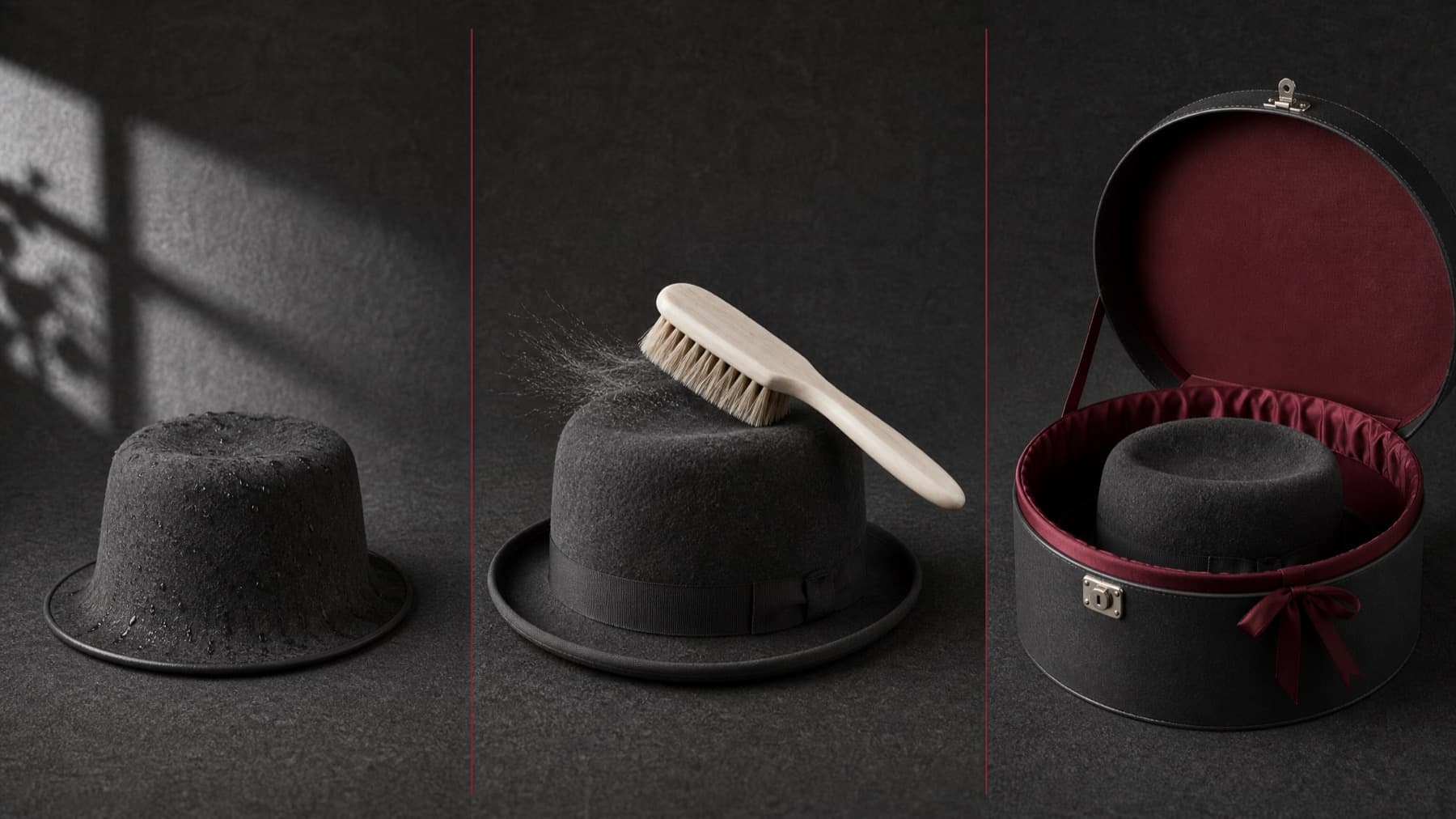
Three felt care steps: a hat drying upside down in shade, a brush sweeping the crown in one direction, and a hat stored in a rigid box
01

Wet

Dry it upside down, in shade, with paper in the crown.

Shake off standing water. Stand the hat upside down on its crown so the brim is not carrying the weight of wet felt, and loosely fill the crown with paper so it dries to the right shape rather than collapsing to a new one.

Give it 12 to 24 hours in a room with moving air. A structured hat wants a full 24 and a firm reshape by hand while the felt is still slightly damp.

Never a radiator, never a hairdryer, never a sunny windowsill. Heat drives the water out faster than the fibres can relax and sets the distortion permanently. That is the one mistake that cannot be undone.
02

Brushed

One direction, soft bristles, always dry.

Brush anticlockwise around the crown and follow the nap on the brim. Going back and forth lifts fibre out instead of laying it down, and on long nap it leaves visible patches.

A new hat sheds loose surface fibre: two to three weeks for wool, about two for fine rabbit, a month for long nap velour. Brush after each wear until it stops and it will stop.

Never brush wet felt. Wet fibres pull out of the mat rather than lying flat, and what you remove does not grow back.

03

Stored

Upside down on the crown, or in a box.

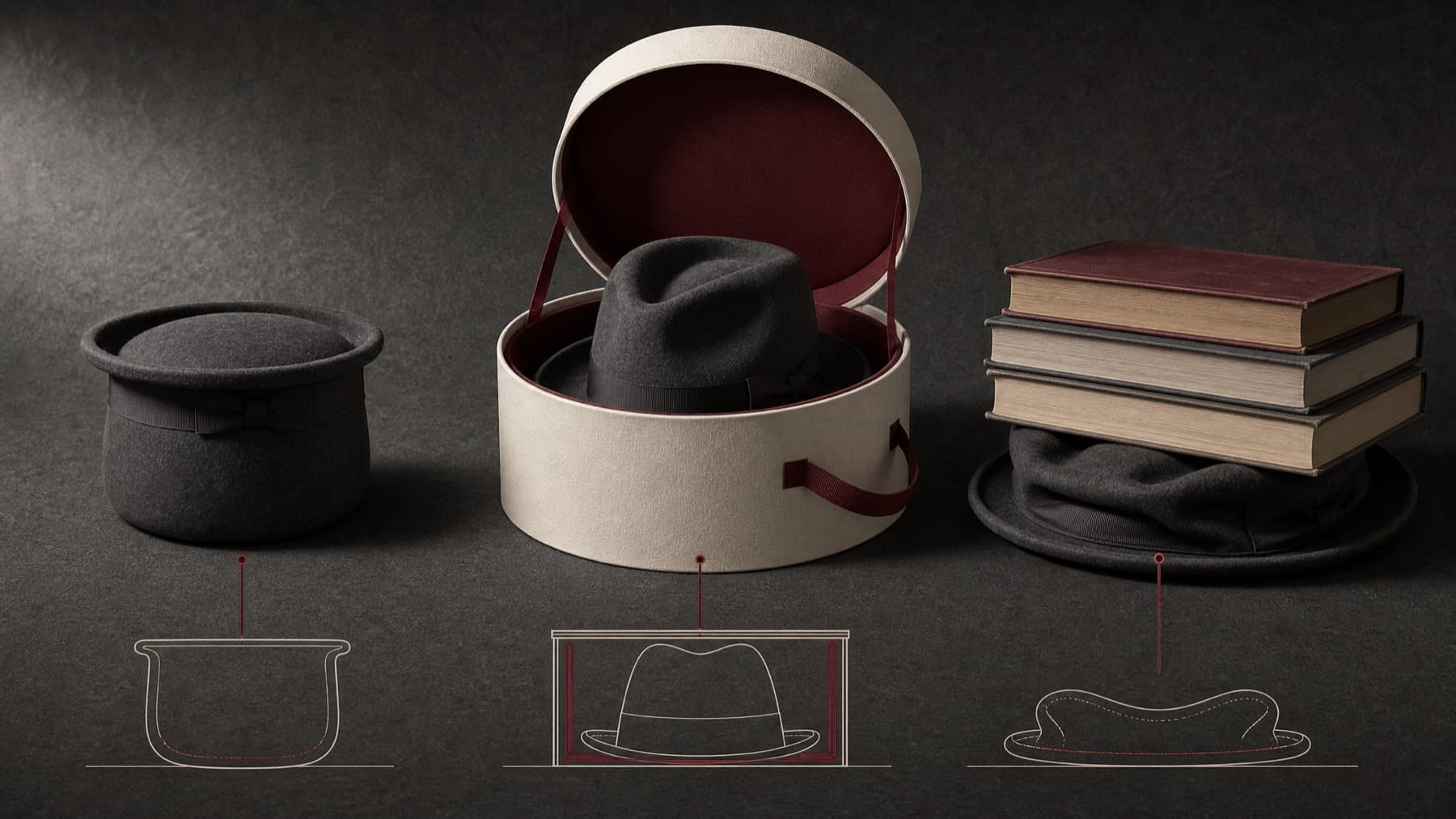
Resting a hat on its brim over weeks flattens the curl and, on a wide brim, waves the edge. Upside down on the crown puts the weight on the strongest part of the shape.

A rigid box is better still, and for structured hats and anything over 10 cm of brim it is the only thing we would recommend. Nothing stacked on top, ever.

Keep it out of a damp cupboard. Felt holds humidity and slack felt loses its crease.

Storage,
in one picture

Left, correct: resting on the crown, weight off the brim. Centre, best: inside a rigid box, nothing touching the brim edge. Right, what not to do: flat under weight, where the crown buckles and stays buckled.

The brush and box are sold together because between them they solve the two problems every new felt hat has.

Hat brush and box
Three felt hats showing storage outcomes: resting on the crown, inside an open rigid box, and crushed flat under a stack of books
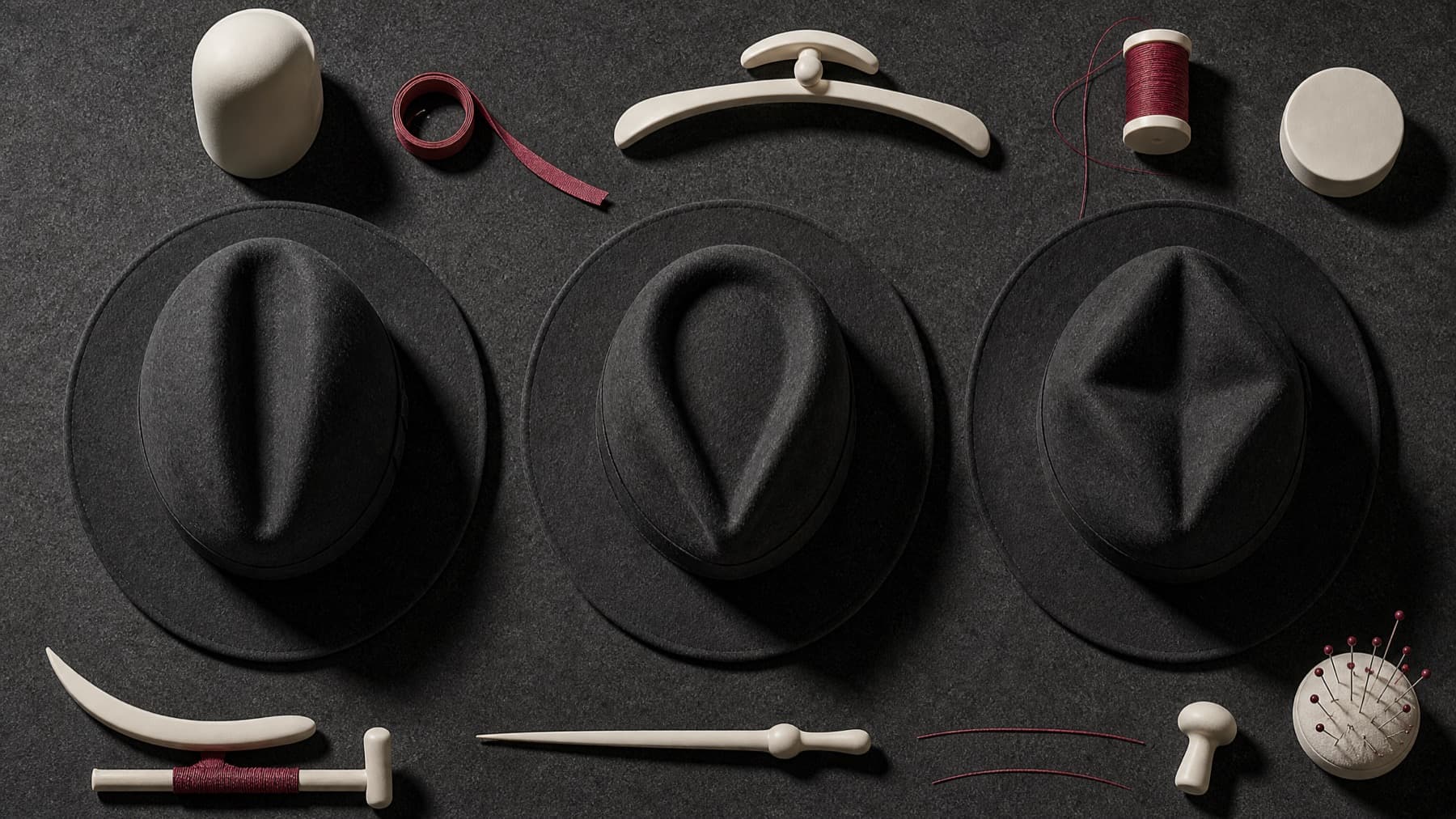
Three felt hat crowns seen from directly above with a centre crease, a teardrop crease and a diamond crease

Reshaping

Three creases,
all reversible

Centre dent, teardrop, diamond. On a half-stiffened or soft hat you can move between them with your hands: open the crown out flat, decide where the long fold sits, and pinch the front with a thumb and two fingers.

Steam helps, held well away from the felt so the surface never gets properly wet. On a structured hat, do not attempt this — the resin has set the shape and forcing a new crease will crack the finish.

A hat that will not hold the crease you put in it usually has less stiffener than you want, not a fault. Every product page states the density and the stiffness grade so you can tell before you buy.

When care is not the answer

If a hat arrives with a fault, or develops one that is not wear, that is a conformity issue and not a care issue. The legal guarantee runs for 3 years and you do not need to have followed any of the above to rely on it.